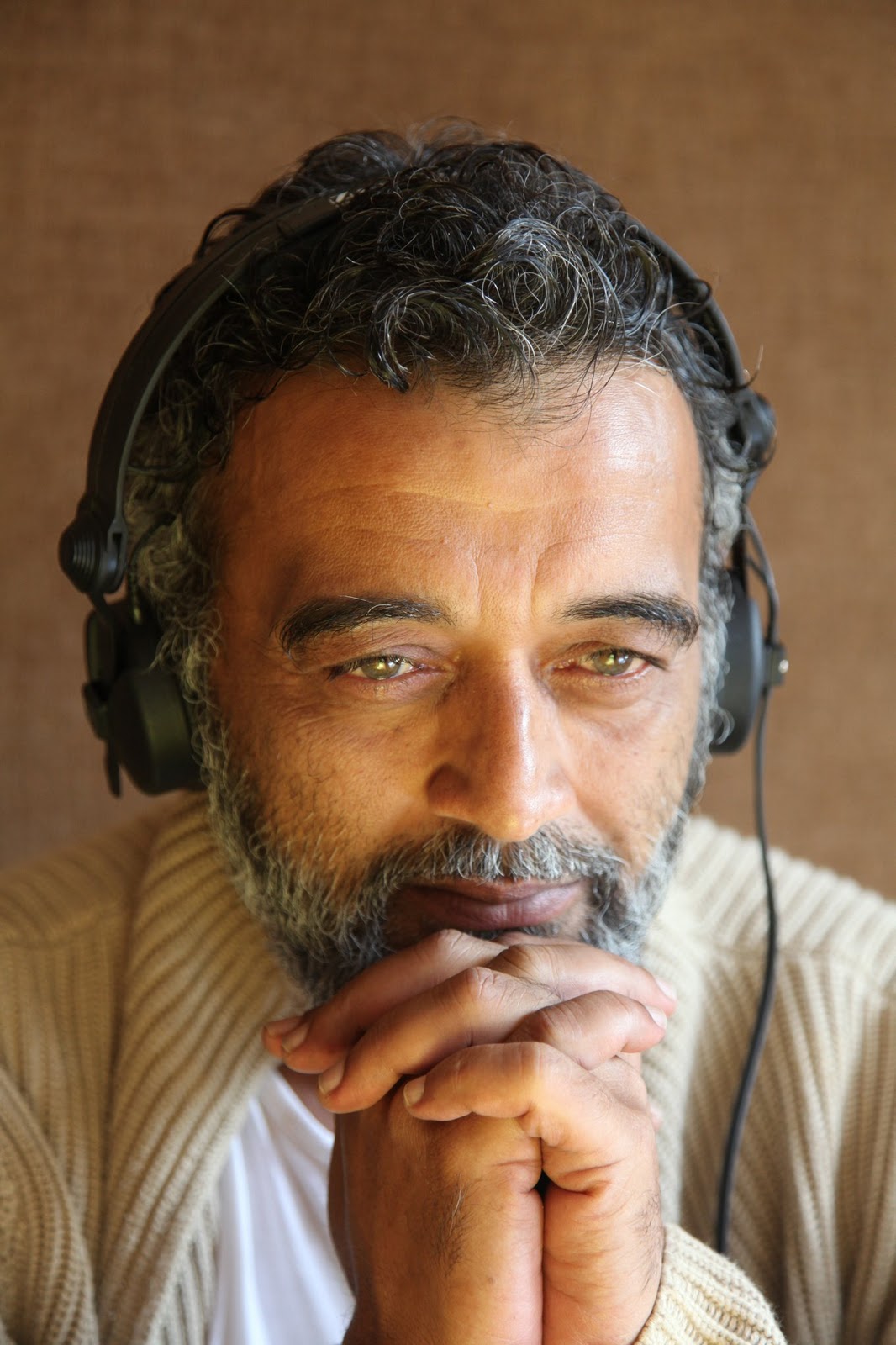
Kishore Kumar (4 August 1929 – 13 October 1987),(Bengali:কিশোর কুমার ) born Abhas Kumar Ganguly was a popular Indian film playback singer. He is also known as an actor,
lyricist, composer, producer, director, screenplay writer and
scriptwriter. Kishore Kumar sang in many Indian languages including Bengali, Hindi, Marathi, Assamese, Gujarati, Kannada, Bhojpuri, Malayalam and Oriya. He won 8 Filmfare Awards for Best Male Playback Singer and holds the record for most number of Filmfare Awards won in that category. He was awarded the "Lata Mangeshkar Award" by the Madhya Pradesh
government and from that year onwards, the Madhya Pradesh Government
initiated a new award called the "Kishore Kumar Award" for contributions
to Hindi cinema.
Early life
Kishore Kumar was born into the Bengali Ganguly family in Khandwa, Central Provinces and Berar (now in Madhya Pradesh) as Abhas Kumar Ganguly.[1]
His father Kunjalal Ganguly (Gangopadhyay) was a lawyer. His mother
Gouri Devi came from a wealthy Bengali family. Kishore was the youngest
of four siblings, the other three being Ashok Kumar (the eldest), Sati Devi, and Anoop Kumar.
While Kishore was still a child, Ashok Kumar
became a Bollywood actor. (Later, Anoop Kumar also ventured into cinema
with the help of Ashok Kumar). Spending time with his brothers, Kishore
also started to take a keen interest in movies and music. He became a
fan of singer-actor Kundan Lal Saigal, whom he considered his guru, and tried to follow Saigal's singing style.
Career
After Ashok Kumar became a big star in Hindi films, the Ganguly family used to visit Mumbai regularly. Abhas Kumar changed his name to Kishore Kumar and started his cinema career as a chorus singer at Bombay Talkies, where his brother worked. Kishore Kumar's first film as an actor was
Shikari (1946), in which Ashok Kumar
played the lead role. Music director Khemchand Prakash gave Kishore
Kumar a chance to sing "Marne ki duayen kyon mangu" for the film
Ziddi (1948). After this, Kishore Kumar got many other assignments, but he was not very serious about a film career.
[2] In 1949, he decided to settle in Mumbai.
Kishore Kumar played hero in the Bombay Talkies film Andolan
(1951), directed by Phani Majumdar. Although Kishore Kumar got some
assignments as an actor with help of his brother, he was more interested
in becoming a singer. He was not interested in acting, but his elder
brother Ashok Kumar wanted him to be an actor like himself.[3]
He starred in Bimal Roy's
Naukri (1954) and Hrishikesh Mukherjee's directorial debut
Musafir (1957). Salil Chowdhury, the music director for
Naukri was initially dismissive of him as a singer, when he came to know that Kishore Kumar didn't have any formal training in music.
[4] However, after hearing his voice, he gave him the song
Chhota sa ghar hoga, which was supposed to be sung by Hemant Kumar.
Kishore Kumar starred in films
New Delhi (1957),
Aasha (1957),
Chalti Ka Naam Gaadi (1958),
Half Ticket (1962), and
Padosan (1968).
Chalti Ka Naam Gaadi(1958), his home production, starred the three Ganguly brothers and Madhubala.
The film is about romance between a city girl (Madhubala) and a car
mechanic (Kishore Kumar), with a subplot involving the brothers.
Music director S. D. Burman is credited with spotting Kishore Kumar's
talent as a singer, and advancing his singing career. During the making
of Mashaal (1950), Burman visited Ashok Kumar's house, where he heard Kishore imitating K. L. Saigal. He complimented Kishore and told him that he should develop a style of his own, instead of copying Saigal.[3] He kept Burman's advice in mind and eventually developed his own style of singing, which featured the yodeling that he had heard on the gramophone records of Tex Morton and Jimmie Rodgers bought by his brother Anoop Kumar.[5]
S. D. Burman recorded with Kishore for Dev Anand's
Munimji (1954),
Taxi Driver (1954),
House No. 44 (1955),
Funtoosh (1956),
Nau Do Gyarah (1957),
Paying Guest (1957),
Guide (1965),
Jewel Thief (1967),
Prem Pujari (1970), and
Tere Mere Sapne (1971). He also composed music for Kishore Kumar's home production
Chalti Ka Naam Gaadi (1958). Some of their initial films included the songs "Maana Janaab Ne Pukara Nahin" from
Paying Guest, "Hum Hain Rahi Pyar Ke" from
Nau Do Gyarah (1957), "Ai Meri Topi Palat Ke Aa" from
Funtoosh, and "Ek Ladki Bheegi Bhaagi Si" and "Haal Kaisa Hai Janaab Ka" from
Chalti Ka Naam Gaadi (1958).
[6] Asha Bhosle and Kishore Kumar performed duets composed by S. D. Burman including "Chhod Do Aanchal" from
Paying Guest (1957), "Ankhon Mein Kya Ji" from
Nau Do Gyarah (1957), "Haal Kaisa Hai Janaab Ka" and "Paanch Rupaiya Baara Aana" from
Chalti Ka Naam Gaadi (1958) and "Arre Yaar Meri Tum Bhi Ho Gajab" from
Teen Deviyan (1965).
C. Ramchandra was another music director who recognized Kishore Kumar's talent as a singer.
[4] Their collaborations include "Eena Meena Deeka" from
Aasha (1957). Kishore Kumar's work includes "Nakhrewaali" from
New Delhi (1956) by Shankar Jaikishan, "C.A.T. Cat Maane Billi" and "Hum To Mohabbat Karega" from
Dilli Ka Thug (1958) by Ravi, and "Chhedo Na Meri Zulfein" from
Ganga Ki Lahren (1964) by Chitragupta.
Kishore Kumar produced, directed, and acted in Jhumroo (1961).
He wrote the lyrics for the title song, "Main Hoon Jhumroo," and
composed music for all the songs in the film. Later, he produced and
directed Door Gagan Ki Chhaon Mein (1964). He wrote the script
and composed music for the film. Its based on the relationship between a
father (Kishore Kumar) and his deaf and mute son (played by his
real-life son, Amit Kumar). He made another two films called Door Ka Rahi (1971) and Door Waadiyon Mein Kahin (1980).
In the 1960s, as an actor, Kishore Kumar built up a notoriety for coming late for the shootings, or bunking them altogether.
[7] His films flopped frequently, and he landed in income tax trouble.
[3] As a singer, his work in this period includes "Zaroorat Hai Zaroorat Hai" from
Manmauji (1961), "Gaata Rahe Mera Dil" from
Guide (1965), and "Yeh Dil Na Hota Bechara" from
Jewel Thief (1967).
In the late 1960s, Rahul Dev Burman worked together on the soundtrack of the film
Padosan (1968), in which Kishore Kumar sang the songs "Mere Saamne Wali Khidki Mein" and "Kehna Hai."
Padosan was a comedy film starring Kishore Kumar as a dramatist-musician, Mehmood as a Carnatic music and dance teacher, and Sunil Dutt
as a simpleton named Bhola. Kishore Kumar's character in was inspired
by the personality of his uncle, Dhananjay Bannerjee (a classical
singer).
[2]
The highlight of the film was a musical, comical duel between Kishore
Kumar-Sunil Dutt and Mehmood: "Ek Chatur Nar Karke Singaar."
In 1969, Shakti Samanta produced and directed the film
Aradhana,
for which the music was composed by S.D. Burman. It is said that after
recording two songs for the film, the popular playback singer Mohammed Rafi went to Hajj, where he heard that professional singing is against Islam. Confused, he took a break from singing and went to London to be with his son.
[citation needed]
Shakti Samanta suggested that Kishore Kumar sing rest of the songs.
When the film was released, the songs "Mere Sapno Ki Rani" and "Roop
Tera Mastana" established Kishore Kumar as a leading playback singer in
Bollywood.
[8] Kishore Kumar won his first Filmfare award for the song "Roop Tera Mastana".
1970s and 1980s
In 1970s and 1980s Kishore Kumar sang for Rajesh Khanna, Amitabh Bachchan, Dharmendra, Jeetendra, Sanjeev Kumar, Dev Anand, Shashi Kapoor, Randhir Kapoor, Rishi Kapoor, Sanjay Dutt, Sunny Deol, Anil Kapoor, Vinod Khanna, Rakesh Roshan, Dilip Kumar, Pran, Vinod Mehra, Chunky Pandey, Kumar Gaurav, Govinda and Jackie Shroff.
S. D. Burman and Kishore Kumar continued to work together, including "Phoolon Ke Rang Se" and "Shokhiyon Mein Ghola Jaaye" from
Prem Pujari (1969), "Aaj Madhosh Hua Jaaye Re," "Khilte Hain Gul Yahan" and "O Meri Sharmilee" from
Sharmilee (1971), "Meet na mila" from
Abhimaan (1973), "Pyaar Ke Is Khel Mein" from
Jugnu, "Phoolon Ke Dere Hain" from
Zameer
(1974). In 1975, S. D. Burman composed his last song for Kishore Kumar.
S. D. Burman went into a coma for the second time, soon after Kishore
recorded the song "Badi Sooni Sooni Hai" for the film
Mili.
[4]
He sang memorable songs with deep soft voice such as "Yeh Jeevan hai",
"Zindagi Ka Safar", "Chingari Koi Bhadke", "Kuch to log kahenge",
"Jeevan Ke Din", "Chookar Mere Mann Ko", " Aanewala pal janewala Hai",
"Koi hota Jisko Apna ". The amazing depth in his voice spelling the
philosophy mesmerized listeners. Although not trained classically, he
sang "Mere naina Saawan Bhado " a semi-classical song and in the soft
romantic version of the song "Hume tumse pyar Kitna " he out-shined the
classical version of "Parveen Sultana ". Though he was patronized
initially by of one of the greatest composers of India "Sachin Deb
Burman", in the Seventies and Eighties he was the lead singer for almost
every composer. He is very popular and a craze amongst the youth of the
21st century as well. He was awarded the "Lata Mangeshkar Award" by the
Madhya pradesh government and immediately a new award "Kishore Kumar
Award" was initiated by the Madhya Pradesh government to honour him. The
committee which conferred him the award was chaired by noted classical
singer "Kumar Gandharva" and had noted journalist "Pritish Nandi " as a
member.
In spite of his tremendous success "Aradhana" onwards, he remained
respectful towards Rafi his whole life. When fans started comparing the
two singers for their talent, he felt bad and he visited Rafi and told
him that he considered him as a great singer and could never attempt to
sing his songs. That was the humble Kishore!
Kishore has won the filmfare award for best male playback singer a record eight number of times.
R. D. Burman frequently used Kishore Kumar as the male singer and
recorded several songs with him in the 1970s. Some Kishore Kumar-R. D.
Burman songs include "O Maajhi Re" from
Khushboo, "Yeh Shaam Mastaani" and "Yeh Jo Mohabbat Hai" from
Kati Patang (1971), "Chingari Koi Bhadke" and "Kuchh To Log Kahenge" from
Amar Prem (1972), "Raat Kali Ek Khwab Mein Aayi" from
Buddha Mil Gaya (1971), "Musafir Hoon Yaaron" from
Parichay (1972), "Diye Jalte Hain" from
Namak Haraam (1973), "Meri Bheegi Bheegi Si" from
Anamika (1973), "Zindagi Ke Safar Mein" from
Aap Ki Kasam (1974), "Agar Tum Na Hote" and "Humein Tum Se Pyaar Kitna" from
Kudrat, "Mere Naina Saawan Bhadon" from
Mehbooba, and "Chingari Koi Bhadke (Amar Prem)" and "Jab Bhi Koi Kangana" from
Shaukeen (1986).
R. D. Burman recorded several duets pairing Kishore Kumar with Asha Bhosle and with Lata Mangeshkar. Some of these duets include "Panna Ki Tamanna" from
Heera Panna (1973), "Neend Chura Ke Raaton Mein" from the film
Shareef Budmaash, "Kya Yehi Pyaar Hai" from Sanjay Dutt's debut film
Rocky (1981), "Sagar Kinare" from
Sagar in [1985], "Aap Ki Aankhon Mein Kuchh" from
Ghar, "Jaane Ja Dhoondta" and "Nahi Nahi" from
Jawani Diwani, "Kharoshoo" from
Harjai (1982).
Apart from the Burmans, Kishore Kumar worked with other music directors as well. The composer duo Laxmikant-Pyarelal (L-P) composed many songs sung by him. Some of their songs include "Mere Mehboob Qayamat Hogi" from
Mr. X In Bombay, "Mere Naseeb Mein Aye Dost" from
Do Raaste, "Yeh Jeevan Hai" from
Piya Ka Ghar, "Mere Dil Mein Aaj Kya Hai" from
Daag: A Poem of Love, "Nahi Mai Nahi Dekh Sakta" from
Majboor, "Mere diwanepan ki bhi" from
Mehboob Ki Mehndi, "Naach Meri Bulbul" from
Roti, "Chal Chal Mere Haathi" from
Haathi Mere Saathi, "Gaadi Bula Rahi Hai" from
Dost, "Ruk Jaana Nahi" from
Imtihaan, "Ek Ritu Aaye" from
Gautam Govinda, "My Name Is Anthony Gonsalves" from
Amar Akbar Anthony, "Bahut Khoobsurat Jawan Ek Ladki" from
Dostana and "Om Shanti Om" as well as "Paisa Yeh Paisa" from
Karz. Laxmikant-Pyarelal composed several Kishore-Lata duets, including "Achchha To Hum Chalte Hain" from
Aan Milo Sajna, "Gore Rang Pe Na Itna" from
Roti, "Main Solah Baras Ki" from
Karz, and "Din Mahine Saal" from
Avtaar, "Tu Kitne Baras Ki" from
Karz. L-P also got Kishore Kumar and Mohammed Rafi to sing duets for the films
Dostana,
Ram Balram and
Deedaar-E-Yaar. L-P composed a duet with Kishore Kumar and Alisha Chinoy, "I love you (Kaate Nahin Katate Yeh Din Yeh Raat)" from
Mr. India in (1987). Salil Chowdhury recorded songs like "Koi Hota Jisko Apna" from
Mere Apne and "Gujar Gaye Din Din" from
Annadata. Ravindra Jain recorded "Ghungroo Ki Tarah" and the duet "Le Jaayenge Le Jaayenge" from
Chor Machaye Shor and the duet "Tota Maina Ki Kahani" from
Fakira. Khaiyyaam recorded beautiful duets with Lata Mangeshkar such as "Hazar Rahein" from
Thodisi Bewafaii,
Aankhon Mein Humne Aapke Sapne Sajaye Hain,
Chandani Raat Mein Ek Bar. Hridaynath Mangeshkar recorded
Zindagi Aa Raha Hoon Main from
Mashaal. Kalyanji Anandji recorded several songs with Kishore Kumar including
Zindagi Ka Safar and
Jeevan Se Bhari Teri Aankhein, from
Safar,
Pal Pal Dil Ke Paas from
Black Mail,
Apne Jeevan Ki Uljhan from
Uljhan,
Mera Jeevan Kora Kagaz from
Kora Kagaz,
O Saathi Re from
Muqaddar Ka Sikandar,
Khaike Paan Banaraswala from
Don,
Neele Neele Ambar Par from
Kalakar and
Pal Bhar Ke Liye from
Johny Mera Naam.
Other composers including Rajesh Roshan, Sapan Chakraborty, Jaidev, Chitragupta (composer), Usha Khanna, Sohnik Omi, Prem Dhawan, Vanraj Bhatia and Bappi Lahiri also worked with Kishore Kumar. Rajesh Roshan's film
Julie featured songs sung by Kishore Kumar,
Bhool Gaya Saab Kuchh (duet with Lata Mangeshkar) and
Dil Kya Kare Jab Kisise. Their other songs include
Yaadon Mein Woh from
Swami,
Chhookar Mere Man Ko Kiya Toone Kya Ishaara from
Yaarana,
Tune Abhi Dekha Nahin from
Do Aur Do Paanch and
Kahan Tak Ye Man Ko Andhere Chhalenge as well as
Kahiye, Suniye (duet with Asha Bhosle) from
Baton Baton Mein. Bappi Lahiri also recorded many songs with Kishore Kumar, including
Pag Ghunghroo Bandh from
Namak Halaal (1982),
Manzilen Apni Jagah Hai from
Sharaabi (1984) and
Chalte Chalte Mere Ye Geet from
Chalte Chalte (1976),
Saason Se Nahi Kadmose Nahi from
Mohabbat in (1987) and duets with (Lata Mangeshkar)) like
Taa thaiya from
Himmatwala in (1984),
Albela Mausam from
Tohfa in (1985) and another duet
Pyar Ka Tohfa from the same film.
During the Indian Emergency (1975–1977), Sanjay Gandhi asked Kishore Kumar to sing for an Indian National Congress rally in Mumbai, but he refused.[9] As a result, Information and broadcasting minister Vidya Charan Shukla (1975–1977) put an unofficial ban on playing Kishore Kumar songs on the All India Radio and Doordarshan from 4 May 1976 till the end of the Emergency.[10][11]
Later years
Kishore Kumar produced and directed some movies in the late 1970s and early 1980s, such as Badhti Ka Naam Daadhi (1978), Zindagi (1981) and Door Wadiyon Mein Kahin (1980): His last appearance as an actor.
With patronage from R. D. Burman and Rajesh Roshan, Kishore Kumar's son Amit Kumar became a Bollywood singer in the 1980s. Kishore Kumar also continued singing for several actors. He also did some stage shows, apparently to earn money to pay his income tax arrears.
[7] Kishore Kumar stopped singing for Amitabh Bachchan in the mid-1980s, after Bachchan did not do a guest appearance in a film
Mamta Ki Chhaon Mein which was produced by Kishore Kumar but called a truce with Amitabh by singing for him in
Toofan.
[12] He also temporarily stopped singing for Mithun Chakraborty, after Yogeeta Bali divorced him and married Chakraborty.
[13] However, later Kumar sang for him in many films like
Disco Dancer,
Muddat, and
Pyaar Ka Mandir.
In the mid-1980s, Kishore Kumar sang for Anil Kapoor in Kapoor's debut film as a leading man,
Woh Saat Din and also recorded
Mr. India. He sang a duet with Alka Yagnik, "Tumse Badhkar Duniya Mein Na Dekha" for
Kaamchor in (1982). He also recorded some songs for the film
Saagar with R. D. Burman. By this time, he had decided to retire and was planning to go back to his birthplace, Khandwa.
[7]
On 13 October 1987, his brother Ashok Kumar's 76th birthday, he died
of a heart attack in Mumbai at 4:45 pm. His body was taken to Khandwa
for cremation. He had recorded his last song a day before he died. The
song was Guru Guru, a duet with Asha Bhosle, for the film Waqt Ki Aawaz (1988) composed by Bappi Lahiri for Mithun Chakraborty and Sridevi.
Kishore Kumar's song
Pal Bhar Ke Liye from the film
Johny Mera Naam (1970) was used in an episode of
The Simpsons titled "Kiss Kiss, Bang Bangalore."
[14] His songs have been featured in several films, including
Such a Long Journey (1998) and
Side Streets (1998).
[15] Sony TV organised the television singing contest
K For Kishore to search for a singer like Kishore Kumar.
Personal life
Kishore Kumar married four times. His first wife was Bengali singer and actress Ruma Guha Thakurta aka Ruma Ghosh. Their marriage lasted from 1950 to 1958.
Kishore's second wife was actress Madhubala, who had worked with him on many films including his home production
Chalti Ka Naam Gaadi (1958) and Jhumroo (1961). When Kishore Kumar proposed to her, Madhubala was sick and was planning to go to London for treatment. At this time, she didn't know that she had a ventricular septal defect
(hole in the heart), and her father wanted her to wait and consult the
London doctors first. Furthermore, at the time he was married to Ruma.
After his divorce, because Kishore Kumar was Bengali Hindu (Brahmin) and Madhubala Muslim,
they had a civil wedding ceremony in 1960. His parents refused to
attend. The couple also had a Hindu ceremony to please Kumar's parents,
but Madhubala was never truly accepted as his wife. Within a month of
her wedding she moved back to her bungalow in Bandra because of tension
in the Kishore Kumar household. They remained married but under great
strain for the remainder of Madhubala's life. The doctors in London told
Madhubala that she would not live for long. The marriage lasted for
nine years, and ended with Madhubala's death on 23 February 1969.
Kishore Kumar's third marriage was to Yogeeta Bali, and lasted from 1976 to 4 August 1978. Kishore was married to Leena Chandavarkar from 1980 until his death. Kishore Kumar sired two sons, Amit Kumar (playback singer) with Ruma, and Sumit Kumar with Leena Chandavarkar.
Kumar is said to have been paranoid about not being paid.
[2] During recordings, he would sing only after his secretary confirmed that the producer had made the payment.
[16]
Once, when he discovered that his dues hadn't been fully paid, he
landed up for shooting with make-up on only one side of his face. When
the director questioned him, he replied "Aadha paisa to aadha make-up."
(Half make-up for half payment).
[2] On the sets of
Bhai Bhai,
Kishore Kumar refused to act because the director M V Raman owed him
five thousand rupees. Ashok Kumar persuaded him to do the scene. But,
when the shooting started, he walked across the floor and, each time he
walked a few places, he said,
Paanch Hazzar Rupaiya (five
thousand rupees) and did a somersault. After he reached the end of the
floor, he went out of the studio, jumped into his car, and ordered his
driver Abdul to drive away.
[17]
On another occasion, when producer R. C. Talwar did not pay his dues in
spite of repeated reminders, Kishore turned up at Talwar's residence
one morning and started shouting "
Hey Talwar, de de mere aath hazaar" ("Hey Talwar, give me my eight thousand"). He did this every morning until Talwar paid him.
[16]
The film
Anand (1971) was originally supposed to star Kishore Kumar and Mehmood Ali in the lead.
[18] Hrishikesh Mukherjee,
the director of the film, was asked to meet Kishore Kumar to discuss
the project. However, when he went to Kishore Kumar's house, he was
driven away by the gatekeeper due to a misunderstanding. Kishore Kumar
(himself a Bengali)
hadn't been paid for a stage show organized by another Bengali man, and
had instructed his gatekeeper to drive away this "Bengali", if he ever
visited the house. When Hrishikesh Mukherjee
(also a Bengali) went to Kishore Kumar's house, the gatekeeper drove
him away, mistaking him for the "Bengali" that Kishore Kumar had asked
him to drive away. Consequently, Mehmood had to leave the film as well,
and new actors (Rajesh Khanna and Amitabh Bachchan) were signed up for the film.
[18]
In spite of his "no money, no work" principle, sometimes Kishore
Kumar recorded for free even when the producers were willing to pay.
Such films include those produced by Rajesh Khanna and Danny Denzongpa.[19] On one occasion, Kishore Kumar helped actor-turned-producer Bipin Gupta, by giving him Rs.20,000 for the film Dal Mein Kala (1964). When actor Arun Kumar Mukherjee died, Kishore Kumar regularly sent money to his family in Bhagalpur.[17] Mukherjee was one of the first persons to appreciate Kishore's singing talent.[17]
Many journalists and writers have written about Kishore Kumar's seemingly eccentric behavior.[20][21] Kishore Kumar had put a "Beware of Kishore" sign at the door of his Warden Road flat, where he stayed for some time while his bungalow
was being done up. Once, producer-director H. S. Rawail, who owed him
some money, visited his flat to pay the dues. Kishore Kumar took the
money, and when Rawail offered to shake hands with him, he reportedly
put Rawail's hand in his mouth, bit it, and asked "Didn’t you see the
sign?". Rawail laughed off the incident and left quickly.[17] Kishore Kumar was a loner, and in an interview with Pritish Nandy (1985), he said that he had no friends – he preferred talking to his trees instead.[22]
Once, when a reporter made a comment about how lonely he must be,
Kishore Kumar took her to his garden. He then named some of the trees in
his garden, and introduced them to the reporter as his closest friends.[17]
According to another reported incident, once Kishore Kumar was to record a song for producer-director G. P. Sippy.
As Sippy approached his bungalow, he saw Kishore going out in his car.
Sippy pleaded him to stop his car, but Kishore only increased the speed
of his car. Sippy chased him to Madh Island, where Kishore Kumar finally stopped his car near the ruined Madh Fort.
When Sippy questioned his strange behavior, Kishore Kumar refused to
recognize or talk to him and threatened to call police. Sippy had to
return. Next morning, Kishore Kumar reported for the recording. An angry
Sippy questioned him about his behavior on the previous day. However,
Kishore Kumar insisted that Sippy must have seen a dream, and claimed
that he was in Khandwa on the previous day.[23]
Once, a producer went to court to get a decree that Kishore Kumar
must follow the director's orders. As a consequence, Kishore Kumar
obeyed the director to the letter. He refused to alight from his car
until the director ordered him to do so. Once, after a car scene in Mumbai, he drove on till Khandala because the director forgot to say "Cut".
[17]
In the 1960s, a financier named Kalidas Batvabbal, patently disgusted
with Kishore Kumar's alleged lack of cooperation during the shooting of
Half Ticket,
gave him away to the income tax authorities. Kishore had to face a raid
at his house. Later, Kishore invited Batvabbal home, tricked him by
asking him to enter a cupboard for a "chat" and locked him inside. He
unlocked Batvabbal after two hours and told him "Don’t ever come to my
house again."
[17]
Filmography
Main article: Kishore Kumar filmography
List of songs
Main article: List of songs by Kishore Kumar
Awards
- Filmfare Awards
Winner:
| 1969 |
"Roop Tera Mastaana" |
Aradhana |
Sachin Dev Burman |
Anand Bakshi |
| 1975 |
"Dil Aisa Kisi Ne Mera" |
Amanush |
Shyamal Mitra |
Indeevar |
| 1978 |
"Khaike Pan Banaras Wala" |
Don |
Kalyanji Anandji |
Anjaan |
| 1980 |
"Hazaar Raahen Mudke Dekheen" |
Thodisi Bewafaii |
Khayyam |
Gulzar |
| 1982 |
"Pag Ghungroo Baandh Ke Meera Nachi" |
Namak Halaal |
Bappi Lahiri |
Anjaan |
| 1983 |
"Hamen Aur Jeene Ki" |
Agar Tum Na Hote |
Rahul Dev Burman |
Gulshan Bawra |
| 1984 |
"Manzilen apni jagah" |
Sharaabi |
Bappi Lahiri |
Anjaan |
| 1985 |
"Saagar Kinaare" |
Saagar |
Rahul Dev Burman |
Javed Akhtar |
Nominated:
| 1971 |
"Zindagi Ek Safar" |
Andaz |
Shankar Jaikishan |
Hasrat Jaipuri |
| 1971 |
"Yeh Jo Mohabbat Hai" |
Kati Patang |
Rahul Dev Burman |
Anand Bakshi |
| 1972 |
"Chingari Koi Bhadke" |
Amar Prem |
Rahul Dev Burman |
Anand Bakshi |
| 1973 |
"Mere Dil Mein Aaj" |
Daag: A Poem of Love |
Laxmikant-Pyarelal |
Sahir Ludhianvi |
| 1974 |
"Gaadi Bula Rahi Hai" |
Dost |
Laxmikant-Pyarelal |
Anand Bakshi |
| 1974 |
"Mera Jeevan Kora Kagaz" |
Kora Kagaz |
Kalyanji Anandji |
M.G.Hashmat |
| 1975 |
"Main Pyaasa Tum" |
Faraar |
Kalyanji Anandji |
Rajendra Krishan |
| 1975 |
"O Manjhi Re" |
Khushboo |
Rahul Dev Burman |
Gulzar |
| 1977 |
"Aap Ke Anurodh" |
Anurodh |
Laxmikant-Pyarelal |
Anand Bakshi |
| 1978 |
"O Saathi Re" |
Muqaddar Ka Sikandar |
Kalyanji Anandji |
Anjaan |
| 1978 |
"Hum Bewafa Harghiz" |
Shalimar |
Rahul Dev Burman |
Anand Bakshi |
| 1979 |
"Ek Rasta Hai Zindagi" |
Kaala Patthar |
Rajesh Roshan |
Sahir Ludhianvi |
| 1980 |
"Om Shanthi Om" |
Karz |
Laxmikant-Pyarelal |
Anand Bakshi |
| 1981 |
"Hameh Tumse Pyar" |
Kudrat |
Rahul Dev Burman |
Majrooh Sultanpuri |
| 1981 |
"Chhookar Mere Mann Ko" |
Yaraana |
Rajesh Roshan |
Anjaan |
| 1983 |
"Shayad Meri Shaadi" |
Souten |
Usha Khanna |
Sawan Kumar |
| 1984 |
"De De Pyar De" |
Sharaabi |
Bappi Lahiri |
Anjaan |
| 1984 |
"Inteha Ho Gayi" |
Sharaabi |
Bappi Lahiri |
Anjaan |
| 1984 |
"Log Kehete Hai Main" |
Sharaabi |
Bappi Lahiri |
Anjaan |
- Bengal Film Journalists' Association Awards
Winner:
In Popular Culture
- An official biopic on his life and times is being made by director Anurag Basu, which stars Ranbir Kapoor as the legendary singer. [28]